Advancements in Nanoparticle-Supported Laccase Immobilization: Promising Solutions for Water Treatment
DOI:
https://doi.org/10.61186/jcc.5.3.2Keywords:
Laccase immobilization, Nanoparticle-supported materials, Metal-based materials, Magnetic nanomaterials, Carbon-based nanomaterials, Immobilization methods, Water treatmentAbstract
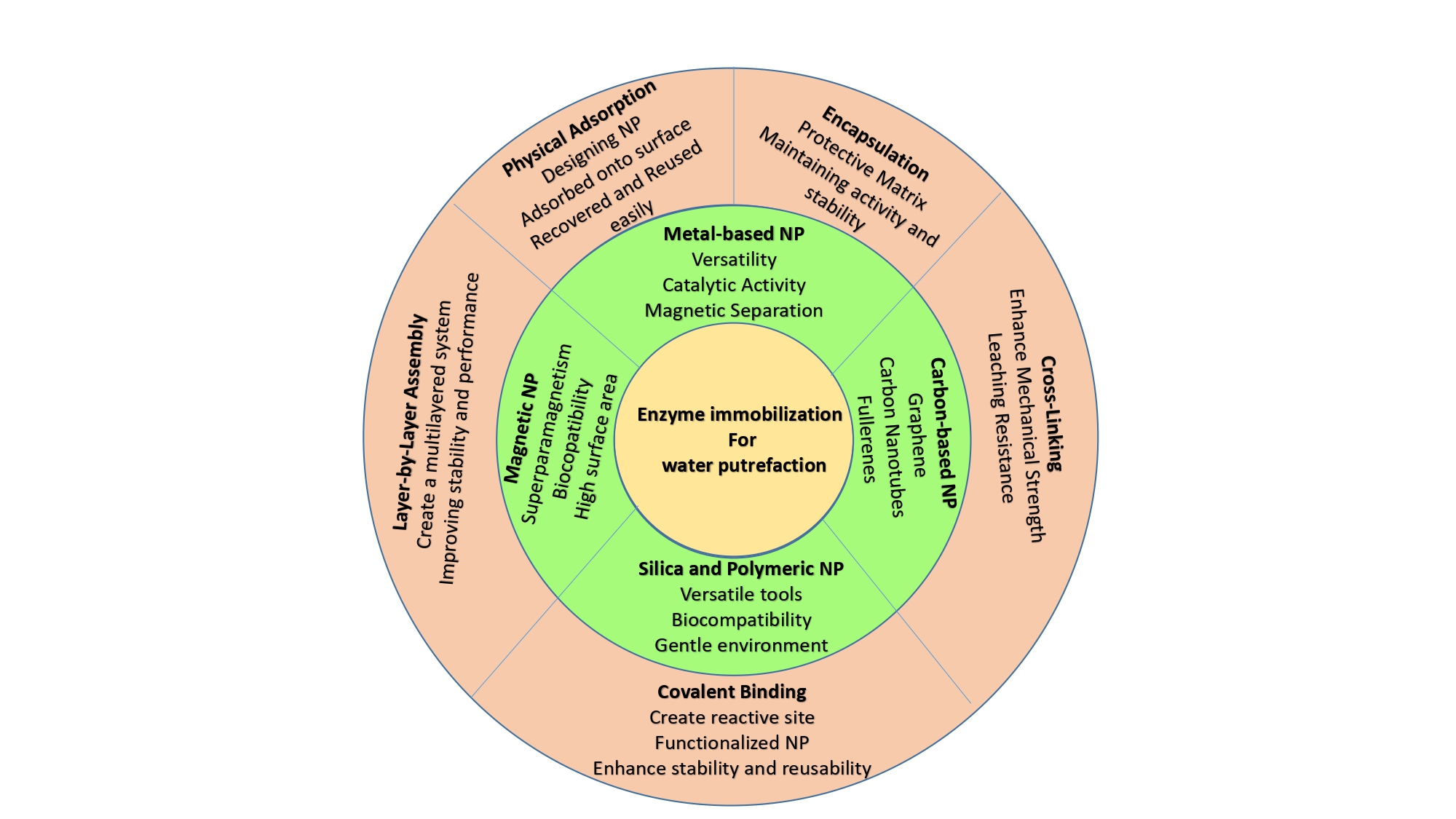
Water purification has become a controversial issue in whole of societies. Increasing demand for water treatment is a constant challenge in the field of water treatment. Nowadays enzyme immobilization plays a crucial role in the realm of water cleansing. Also laccase is the most common enzyme used in this context. Laccase is an enzyme that has gained popularity in various water treatment applications due to its ability to degrade organic pollutants and contaminants. It can be used in combination with different materials, including nanoparticles, to enhance its performance in water purification processes. Laccase is known for its effectiveness in breaking down a wide range of organic compounds, making it a valuable tool in the field of water refinement and environmental remediation. The aim of this study is delve to current knowledge about role of nanoparticles-supported in laccase immobilization for water purification. Our exploration method describes the use of metal-based, magnetic, carbon-based, and other nanoparticle supports along with novels methods including cross-linking, covalent binding, encapsulation, adsorption and layer-by-layer assembly used in laccase immobilization. Results reveal the effectiveness of diverse nanoparticles in enhancing laccase stability and activity. In conclusion underscores the potential of nanoparticle-supported laccase immobilization as a sustainable solution for water treatment, offering improved enzyme performance and reusability.
Published
How to Cite
Issue
Section
License
Copyright (c) 2024 The University of Georgia Publishing House (UGPH)

This work is licensed under a Creative Commons Attribution 4.0 International License.