Piezoelectric composites in neural tissue engineering: material and fabrication techniques
DOI:
https://doi.org/10.52547/jcc.4.1.5Keywords:
Piezoelectric composite, Neural tissue engineering, β-phase induction, Electrical stimulationAbstract
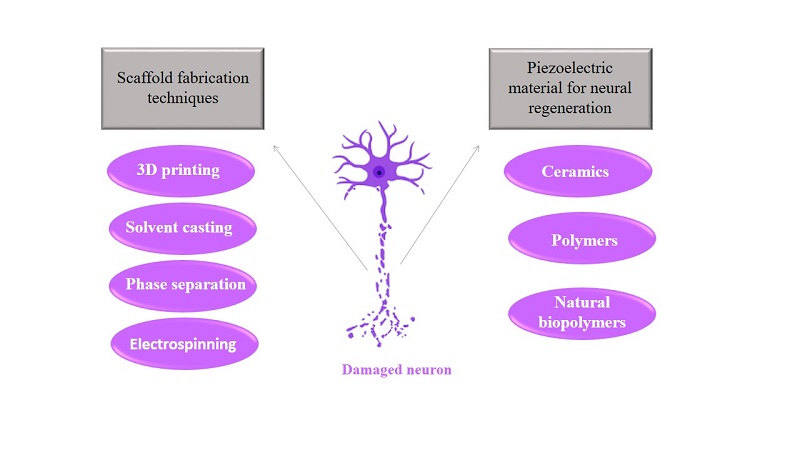
To date, there is no effective treatment for central or peripheral nervous system damage, which results in cognitive and/or sensory impairment. After a neural injury, tissue engineering can provide a scaffold for either transplanted or native cells. With the recent focus on stimuli sensitive scaffolds, sometimes referred to as smart scaffolds, tissue engineering is highly dependent on scaffolds for supporting cell differentiation and growth. Piezoelectric scaffolds are a representative of this class of materials because they can generate electrical charges when mechanically stimulated, creating a prospect their possible use in non-invasive therapy for neural tissue. Research on piezoelectric materials that can be utilized to enhance neural tissue engineering is summarized in this study. The most common employed materials for tissue engineering strategies are discussed, as well as the most significant accomplishments, difficulties, and unmet research and treatment needs that will be needed in the future. As a result, this study compiles the most relevant findings and strategies, and it serves as a starting point for new research in the most relevant and difficult related issues.
Published
How to Cite
Issue
Section
License
Copyright (c) 2022 JCC Research Group

This work is licensed under a Creative Commons Attribution 4.0 International License.