Theranostic Nanocomposites for Multiple Sclerosis: Advances in Theranostic Nanoplatforms, Multimodal Imaging, and Targeted Immunomodulation
DOI:
https://doi.org/10.66224jcc.8.1.3Abstract
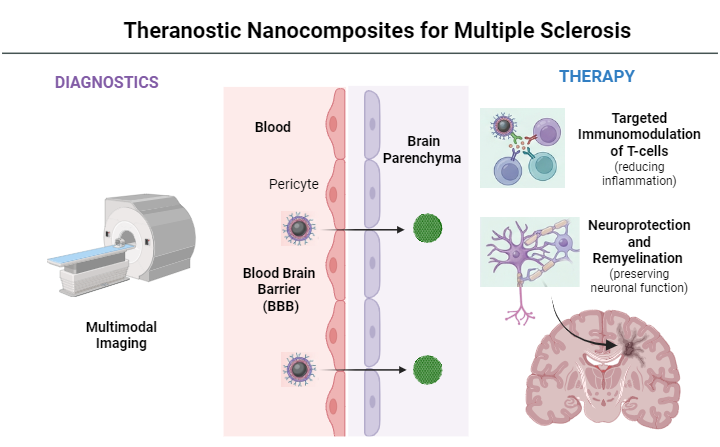
Multiple sclerosis (MS) is a chronic disease of the central nervous system (CNS) where immune mediated processes lead to demyelination and neurodegeneration, followed by the progressive loss of axonal functions. Current immunotherapy approaches suffer from various shortcomings, including low brain penetration, undesired systemic immunosuppression, and lack of repair promoting activity, while routine magnetic resonance imaging (MRI) requires the use of gadolinium based contrast agents with emerging evidence of their adverse effects on the CNS. During the last decade, the concept of theranostics has been actively developed and realized via the design of nanocomposite materials that possess both diagnostic and therapeutic functions. The current mini review highlights recent advances in various theranostic nano platforms for the treatment of MS. It includes SPION based systems allowing MRI visualization of focal inflammation and targeted drug delivery, polymeric nanoparticles for antigen specific immunomodulation, and carbohydrate based nanomaterials for their ability to harness intrinsic immunomodulatory properties. Recent studies showed the potential of these approaches to specifically deliver therapeutic cargo to the lesion site, enhance the visibility of plaques on MRI, and modulate the local immune response. Being used in combination with advanced hybrid imaging modalities such as MRI/PET, MRI/CT, or MRI/optical imaging, and augmented by AI powered image analysis, theranostic nanoparticles may enable real time visualization of the nanoparticle biodistribution and provide important mechanistic insights for each stage of the treatment. Altogether, theranostic nanocomposites represent a promising concept for the treatment of MS that may allow personalized and more efficient disease management.
Published
How to Cite
Issue
Section
License
Copyright (c) 2026 .

This work is licensed under a Creative Commons Attribution 4.0 International License.