The recent advancement of electrode materials for batteries: A mini review
DOI:
https://doi.org/10.66224/jcc.6.2.5Abstract
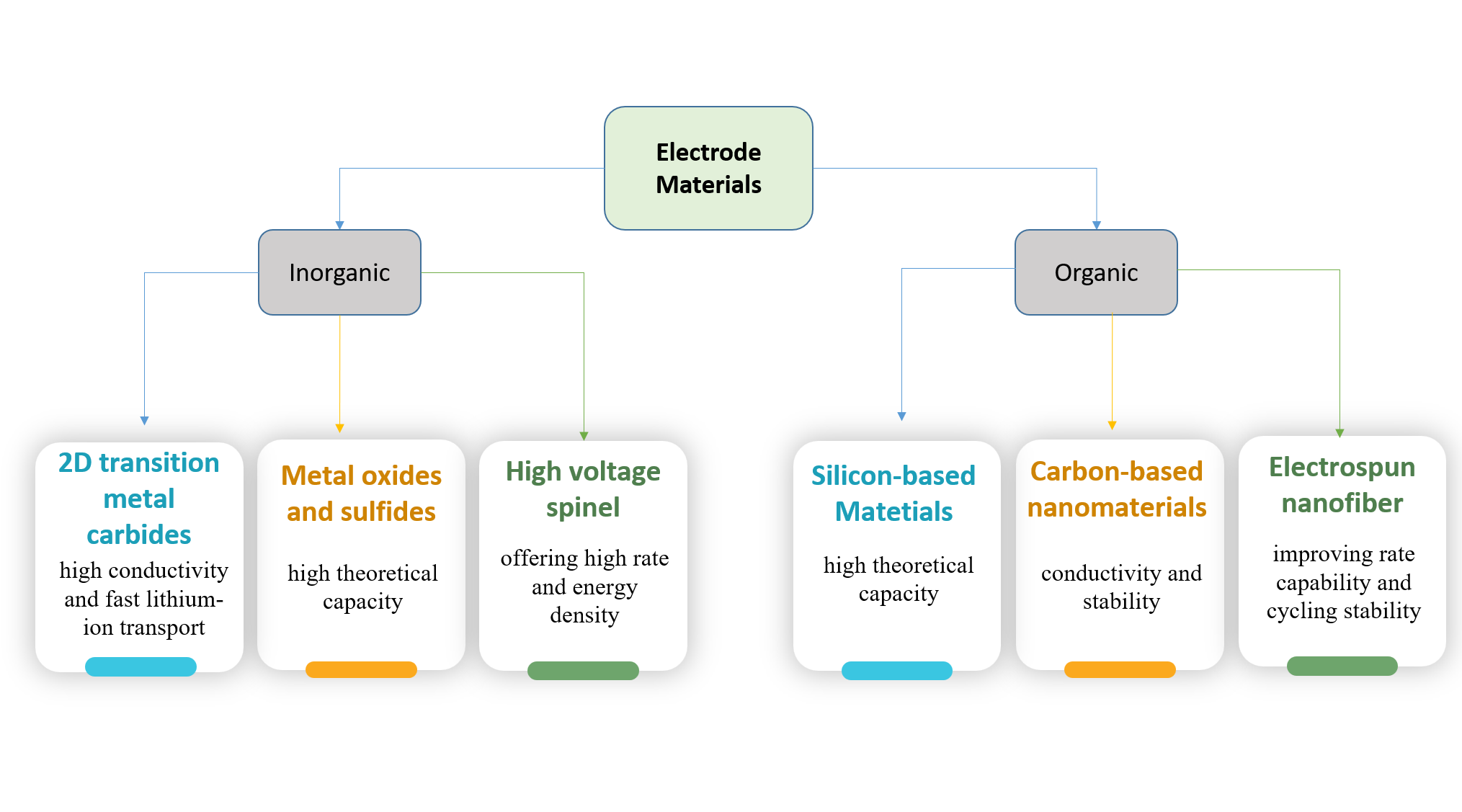
Battery electrode materials have advanced significantly, enabling the advancement of efficient energy storage systems. Throughout this mini-review, we emphasize innovations in lithium-ion batteries, emerging technologies, and the latest developments in anode and cathode materials. Several breakthroughs have been achieved, including the creation of electrodes that offer high voltages and flexibility, the development of metal–organic frameworks and derivatives to enhance electrode performance, and advancements in silicon-based anodes that address capacity and cycle life issues. Furthermore, the review highlights the shift from traditional intercalation materials to conversion-type electrodes, which provide increased specific capacities but are more challenging to stabilize. Additionally, new materials have been integrated to improve energy density, safety, and charging speed of solid-state batteries. A range of strategies, including doping, coating, and the integration of nanomaterials, is being utilized to address issues like material scarcity, safety concerns, and environmental effects. This review provides an extensive summary of current materials, synthesis techniques, and electrochemical mechanisms, along with future directions for developing effective electrodes aimed at producing long-lasting, efficient batteries with high energy density for upcoming applications.
Published
How to Cite
Issue
Section
License
Copyright (c) 2024 .

This work is licensed under a Creative Commons Attribution 4.0 International License.