The role of ionised magnesium compound in cardiac surgery
DOI:
https://doi.org/10.61186/jcc.7.1.2Abstract
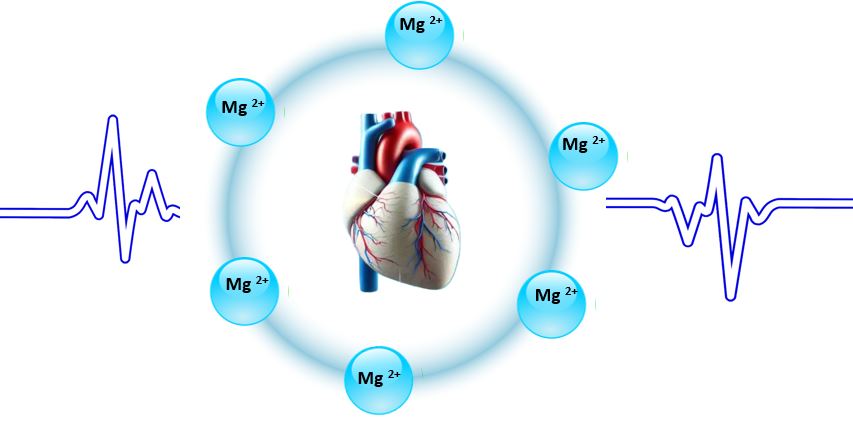
Patients: This was a clinical study of ionized and total magnesium compounds in 30 patients, assessed perioperatively, when undergoing Coronary Artery Bypass Graft (CABG) procedures. The mean age of the patients (3 females and 27 males) was 61.6± 9.6 years, ranging from 35-76 years. All patients underwent a CABG with an average duration of cardiopulmonary bypass of 79.2 ±26.9 minutes. Patients with a history of renal insufficiency, pulmonary disease, implanted pacemaker or any previous cardiac operation were excluded from the study.
Investigations: Total and ionized magnesium, and calcium compounds in serum, as well as Na+, K+, phosphate, creatinine, urea, cholesterol, triglyceride, protein, and albumin were assessed perioperatively. These were characterised as before induction of anesthesia (Point A), after cardiopulmonary bypass (Point B), one hour after admission to intensive care unit (Point C), and the next postoperative morning (Point D).
Result: Only one (3%) patient showed preoperative ionized hypomagnesemia, and another one (3%) showed hypermagnesemia. Following the CABG procedure, (Point B), ionized magnesium levels were statistically reduced (p<0.0001) followed by a gradual elevation which reached almost initial values (Point A versus Point D, p>0.05). There did not seem to be any influence of one form of magnesium compound on another. The total postoperative rhythm disturbances (14/36), which needed therapy in the intensive care unit, showed 8 out of 30 (26%) of patients had ionized hypomagnesemia. No correlation was detected between spontaneous cardiac action after termination of the cardiopulmonary bypass, duration of ventilatory support and ionized magnesium levels. Nevertheless, there was a correlation between catecholamines levels and hypomagnesemia (p<0.05).
Conclusion: The conclusion of this study was that determination of ionized magnesium compounds is important in predicting the pathological state of patients undergoing CABG. This helps to minimise perioperative morbidity.
Published
How to Cite
Issue
Section
License
Copyright (c) 2025 .

This work is licensed under a Creative Commons Attribution 4.0 International License.